A tankless water heater does not store hot water at all. It waits for a faucet to open, senses the flow, fires a burner or energizes its elements, and heats water as it races through a compact heat exchanger. That on-demand design is efficient and space-saving, but it packs a lot of sensors and controls into one small cabinet, and every one of them has to agree before you get hot water. When one of them objects, the unit shuts down and posts an error code. In Independence, MO, the usual culprits are mineral scale coating the heat exchanger, a flow sensor that no longer registers demand, an igniter or flame rod that cannot prove the flame, and venting or gas supply problems that trip the unit's safety limits.
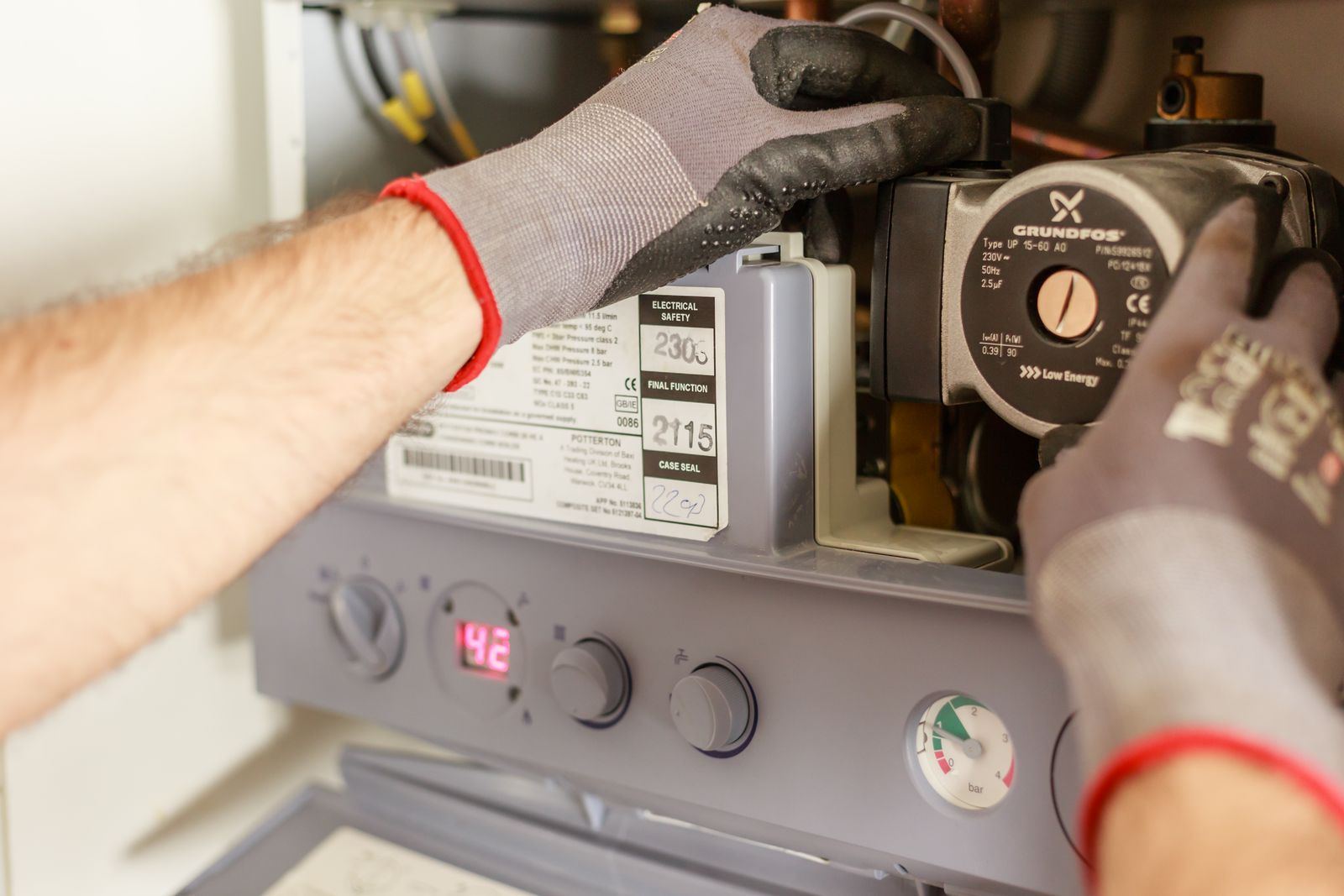
Independence Water Heater starts every tankless repair by reading the unit, not guessing at it. On every service call in Independence, we pull the active error code and the stored fault history, then test the components that code points to: flow sensor output while a faucet runs, flame rod signal in microamps, igniter resistance, inlet gas pressure both static and at full fire, and vent condition from the unit to the termination. Scale gets checked by comparing inlet and outlet temperatures against flow rate, since a heat exchanger that cannot transfer heat shows up clearly in those numbers. Error codes narrow the search, but they rarely name the broken part outright. An ignition code, for example, can come from a worn igniter, a dirty flame rod, low gas pressure, or a blocked intake, and each one calls for a different fix.
After the fault is pinned down, most repairs are finished in a single visit. We descale heat exchangers with a pump and descaling solution circulated through the service valves, replace worn flow sensors, igniters, flame rods, thermistors, and combustion fans, clean inlet filter screens, and correct venting problems that trip pressure switches. When the real issue is a gas line sized for the old tank heater, we tell you plainly and quote the correct pipe run, because no amount of part swapping will fix a unit that is starved for fuel. If you are fighting a cold-water sandwich, we explain whether it is normal behavior for your model or a sign of a setting, fixture, or recirculation problem we can correct. Call (816) 219-8132 for tankless water heater repair in Independence.
Our most requested service is Water Heater Repair in Independence. That's the place to start for most homes.
How to Tell Something Is Wrong
A heater that is starting to struggle rarely hides it for long, and the clues are easy to spot once you know them. These are the red flags our technicians see most often before a breakdown:
- Cold slugs in the middle of hot water that last longer than before
- An error code flashing on the unit's display
- Hot water that fluctuates even though nobody touched the faucet
- Leaks under the unit or around its water connections
- Lukewarm water whenever two fixtures run at the same time
- A heater that only fires when water runs at full blast
- A clicking igniter with no flame, or a flame that lights and quickly drops out
- Unusual noises from the cabinet, like a whine, a roar, or a rattle
Early Action Saves Money
A worn-out anode rod, a sediment-choked tank, or a weak thermocouple rarely fixes itself, and the repair usually costs more the longer it waits. If you notice any of these signs, contact Independence Water Heater at (816) 219-8132 for a prompt inspection.
Talk to Us About Tankless Water Heater Repair
One call gets a technician scheduled and a clear price before any work starts.
Call (816) 219-8132 TodayCommon Questions We Hear
What a Trained Technician Brings to the Job
Start with what is at stake. A gas-fired tankless heater can burn nearly 200,000 BTU per hour at full fire, and its vent is the only thing carrying carbon monoxide out of the house; a joint that pulls loose or an intake that gets blocked changes that in a hurry. On the electric side, the loads are large, frequently more than 100 amps spread over several 240-volt circuits. Then there is the diagnostic puzzle. Error codes point to a system, not a part, so a flow sensor fault, a scaled heat exchanger, and a bad thermistor can look nearly identical on the display, and guessing gets expensive.
What you get from a professional is certainty. Instead of swapping parts, our technicians confirm the fault with a meter, a manometer, and temperature readings, so the fix is aimed at the actual cause. Descaling is done with a pump and service valves, not by pouring vinegar into an inlet and hoping. Gas pressure is checked with the burner at full output, vent runs are inspected against the manufacturer's length and clearance limits, and the unit is tested at low and high flow before we leave. Proper service also helps you stay within the manufacturer's warranty terms, many of which expect qualified service and regular descaling.
Step by Step: How a Visit Works
We work through a clear, repeatable process so you always know what's happening and what it will cost. Here's a look at each step our team takes:
Read the Unit First
The control board is our first stop. We read the current code and past faults, then confirm the diagnosis with a meter and a manometer on the flow sensor, ignition parts, gas supply, and vent.
What We Found & What It Costs
We explain the fault in plain language and put a firm quote in front of you first. When a repair no longer makes sense on an aging unit, you hear that from us directly.
Same-Visit Fix
We carry the parts that fail most on tankless units, so flow sensors, igniters, flame rods, and thermistors are usually replaced on the spot, and a descaling flush takes about an hour.
Full Performance Test
We run hot water at several flow rates, confirm the unit fires cleanly and holds its setpoint, and check gas pressure at full fire before we leave.
Repair or Replace? Let's Figure It Out.
We give honest advice and upfront pricing on every job, big or small.
Get Help: (816) 219-8132Water Heater Care Tips From Our Technicians
Routine maintenance is almost always cheaper and easier than an early replacement. Start with these practical measures our team relies on:
- Clean the inlet water filter screen a few times a year so the flow sensor gets full flow
- Do not keep resetting a recurring code; note it and have it checked
- Schedule a descaling flush every year; hard water may call for one every six months
- If scale comes back quickly, add a softener or a scale-prevention cartridge on the cold inlet
- Tell us before adding a gas appliance, so the gas line can be checked for the extra load
- Keep the vent termination and air intake clear of leaves, nests, snow, and lint
- Never cut power to an outdoor or garage unit in winter, because it needs electricity to protect itself from freezing
Should You DIY or Call a Pro?
Relighting a pilot by following the label is one thing. Diagnosing a gas valve, a burned-out element, a dirty flame sensor, or a tankless error code calls for meters and know-how that a pro brings. Here's a comparison:
| Factor | DIY Attempt | Professional Service |
|---|---|---|
| Reading the Code | Look up the code and replace a guess | Each suspect part tested with a meter |
| Scale Removal | Vinegar poured in without proper valves | Proper solution, pump, and flush time |
| Combustion Safety | No way to test pressure at full fire | Manometer test at full fire, vent inspected |
| Board & Wiring | Risk of shorting the control board | Power verified off, board handled correctly |
| Replacement Parts | Parts bought before the fault is known | Model-matched parts, often on the truck |
| Outcome | Temporary fix at best | Unit tested at low and high flow |
Talk to Our Tankless Water Heater Repair Team
Get your hot water back before a small fault turns into a flooded floor. Independence Water Heater is ready to respond fast.
Tap to Call (816) 219-8132Where We Provide Tankless Water Heater Repair
Our technicians handle tankless water heater repair throughout Independence and the surrounding communities, with the same upfront pricing everywhere we work.